

A midyear burnout check is an honest pause to see how the first 6 months have shaped your energy, your emotions, and your purpose. You do not add a new goal or push harder. You simply tell yourself the truth about how you are really doing.
I want to start with something I do not say enough. If you are tired in a way that sleep does not fix, you are not alone. You are not falling behind. You are a leader who has been carrying a lot, and your body is finally asking you to notice.
We are halfway through the year. For most high performers, this is the moment we quietly brace ourselves. We look at the goals we set in January. We measure how far we still have to go. Then we do the thing we always do. We tell ourselves to work harder in the second half.
I have lived that pattern for years. I know the feeling of smiling in a meeting while something inside me feels flat and far away. So let me offer you a different kind of midyear review. One that starts with your soul, not your scoreboard.
What a Midyear Burnout Check Really Is
A midyear burnout check is a gentle, honest look at your first half. Not your numbers. You. Your energy, your mood, your focus, and your sense of meaning.
Most leaders review their targets at the halfway mark. Very few review themselves. We are trained to track revenue, projects, and headcount. We are not trained to track our own hearts. So we keep going, quarter after quarter, running on fumes and calling it drive.
Here is why this matters more than any goal on your list. Burnout is not just being busy. Researchers who study this describe 3 clear signs. First, deep exhaustion, where your energy feels gone even after rest. Second, a growing cynicism, where you feel distant or numb about work you once cared about. Third, a sense of being ineffective, where you feel like you are doing less and it never feels like enough.
Read those 3 again slowly. If you nodded at even 1 of them, this article is for you. And there is a warning sign hiding under all 3 that most leaders miss completely. I will show it to you in a moment.
The Quiet Signs of Executive Burnout Most Leaders Miss
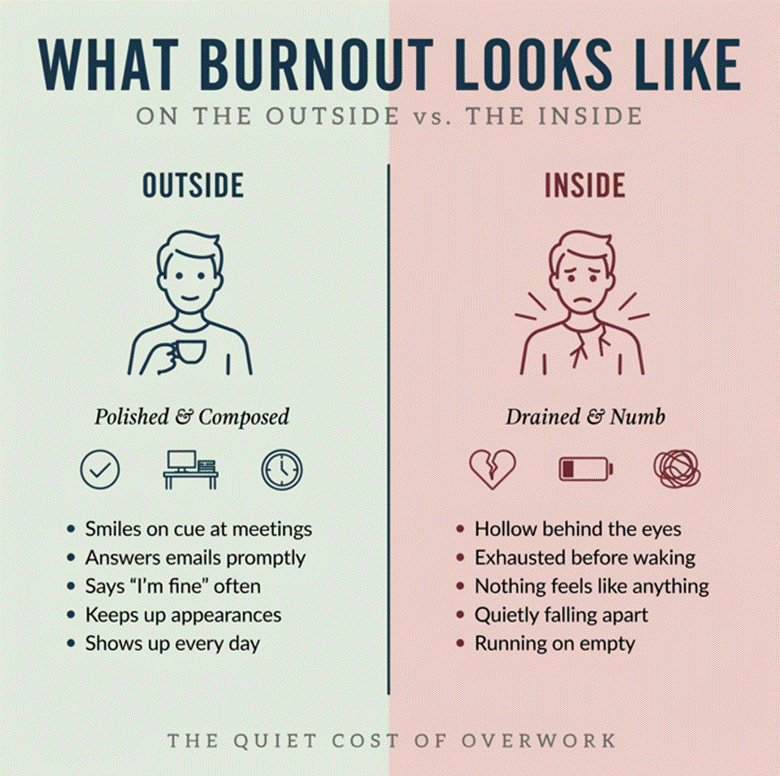
When people picture burnout, they picture someone falling apart. That is not what executive burnout usually looks like.
For high performers, burnout hides in plain sight. You still hit your deadlines. You still lead the team. You still show up polished. On the outside, you look fine. On the inside, something is quietly going out.
Here are the quiet leadership stress signals I watch for, in myself and in the people I coach.
- You feel a low dread on Sunday night, or before you even open your laptop.
- Small requests feel huge, and your patience runs out faster than it used to.
- You get things done, but you feel very little when you do.
- You are physically present with your family, but your mind is still in the last meeting.
- Rest does not restore you anymore, so weekends end and you still feel empty.
- You keep saying “I just need to get through this season,” and the season never ends.
That last one is the sign most leaders miss. It is not a loud crash. It is a slow leak. And a slow leak is dangerous because you can live with it for a long time before you admit it is there.
Now here is the deeper question. Why does this drain us so much more than plain hard work? The answer is not on your calendar. It is in your soul.
Why Your Soul Keeps the Score
There is a difference between being tired from good work and being worn down from proving your worth.
Good work tires your body. Proving your worth tires your spirit. And most high achievers are doing both at once. We are not only working hard. We are working scared. Scared of being seen as less than. Scared that if we slow down, we will be passed over. Scared that our value is only as real as our last win.
That fear is the true fuel of executive burnout. It is also the thing we are most ashamed to admit.
Scripture says it plainly in Proverbs 4:23. “Above all else, guard your heart, for everything you do flows from it.” Notice the order. Guard your heart first, and then the doing flows from a healthy place. Most of us have it backwards. We guard our output and let our hearts run empty.
When you lead from an empty heart, everything costs more. The same meeting drains you twice as much. The same problem feels twice as heavy. This is why 2 leaders can do the same job, and 1 thrives while the other slowly breaks. The work is not the whole story. The soul underneath the work is.
So a real midyear check is not about doing less. It is about leading from a fuller place. That is exactly what the next part is built to do.
The PATHs™ Way to Check Your First Half
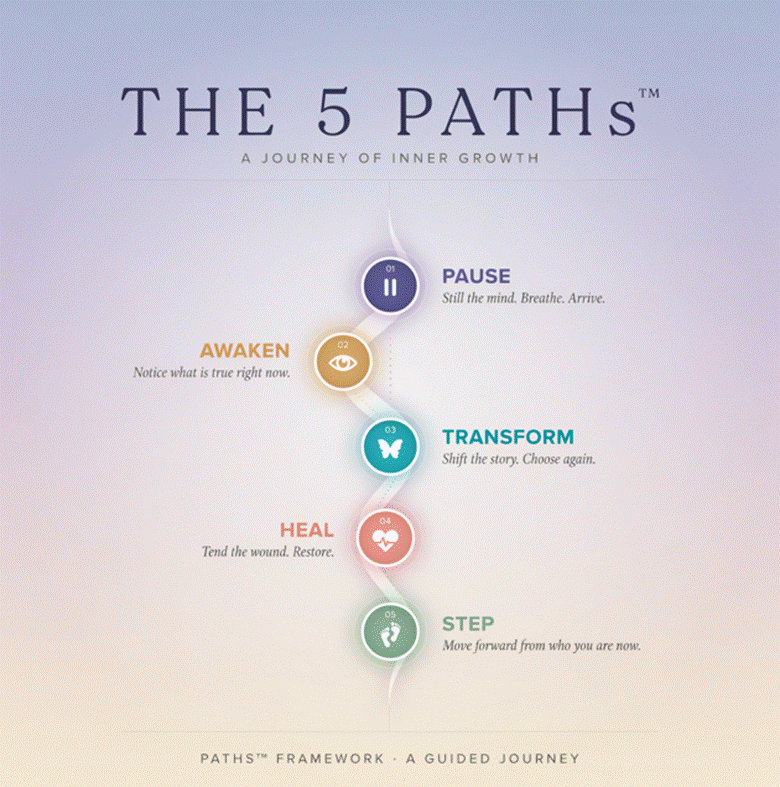
In my coaching, I walk leaders through a faith based framework I call PATHs™. It stands for Pause, Awaken, Transform, Heal, and Step. It is the same path I use for my own midyear reset, and I want to walk you through it here.
Pause
You cannot assess what you will not slow down to see. So the first step is simply to stop.
Not for a week. Even 15 quiet minutes counts. Put the phone down. Take a breath. Jesus said in Matthew 11:28, “Come to me, all you who are weary and burdened, and I will give you rest.” Rest is not a reward you earn after the work. Rest is where the honest looking begins.
Awaken
Now, gently wake up to the truth. Name what is real without judging yourself for it.
Ask yourself 3 simple questions. Where did I feel most alive in the last 6 months? Where did I feel most drained? What have I been pretending is fine that is not fine? Do not fix anything yet. Just see it. Awareness is the seed of every real change.
Transform
Once you see the truth, you get to change your mind about it.
Transform is where you trade the old story for a truer one. The old story says, “My worth is my performance.” The truer story says, “My worth is settled, and my work flows from that.” This shift is quiet, but it changes everything. You start leading from security instead of from fear.
Heal
Some of what you find at midyear does not need a strategy. It needs healing.
Maybe you are carrying an old wound about not being enough. Maybe a hard season left a mark you never tended. Psalm 23 says, “He restores my soul.” Notice it does not say He restores your schedule. It says your soul. Healing is slow, sacred work, and it is not weakness. It is wisdom.
Step
Finally, you take 1 small, brave step. Not 20. One.
Transformation does not come from a giant leap. It comes from consistent, small steps taken with faith and courage. You do not have to fix your whole life by Friday. You just have to take the next right step, and then the one after that.
Your Step-by-Step Midyear Burnout Check
Here is a simple way to actually do your check this week. Set aside 30 minutes. Bring a notebook, not your laptop.
Step 1. Score your energy honestly. On a scale of 0 to 10, how full is your tank right now? Do not think about how full it should be. Just be honest about how full it is.
Step 2. Check the 6 sources of stress. Burnout tends to build in a few specific areas of work. If you want a quick and simple tool, this two minute burnout checkup from Harvard Business Review walks you through 6 common sources of stress, from workload to fairness to how connected you feel to others. Rate each one. High scores show you where the pressure is really coming from.
Step 3. Name your season. Write 1 honest sentence about the last 6 months. Not the highlight reel. The real one.
Step 4. Find the proving. Ask, “Where have I been working to prove myself instead of working from peace?” This is the root that quietly drains most leaders. If review season and the fear of falling short is part of your load, this piece on performance review anxiety may help you name it more clearly.
Step 5. Choose 1 step. Based on what you saw, pick 1 small change for the next 30 days. One boundary. One conversation. One rhythm of rest. Just 1.
Step 6. Pray over it. Before you close the notebook, hand it over. Ask God for wisdom and rest. You were never meant to carry all of this alone.
That is the whole check. It is short on purpose. The goal is truth, not another project.
5 Mistakes That Turn a Check-In Into More Pressure
A midyear check should lighten your load. Too often, we do it in a way that piles on more weight. Watch for these 5 traps.
- Perfectionism. You treat the check like a performance review of your soul, then punish yourself for every gap. This is not a report card. It is a rescue.
- Masking. You write down what sounds acceptable instead of what is true. If you hide the real answer, you cannot heal the real problem.
- Over-performing. You look at the gaps and immediately schedule 12 new goals. That is the same burnout engine wearing a new outfit. Growth from fear just builds a nicer cage.
- Comparing. You measure your first half against someone else’s highlight reel. Your race is your own. Comparison will always tell you a lie about your worth.
- Rushing past rest. You admit you are tired, then refuse to actually rest. God built rest into the design of the world in Genesis 2. If the Creator rested, so can you.
If you catch yourself in 1 of these, do not spiral. Just notice it, and choose the gentler path. That noticing is growth.
What This Looks Like in Real Life
Let me make this real. Names and details are changed, but the story is one I see often.
A senior leader I will call Renee came to me in July. On paper, she was winning. A big title, a strong team, a promotion on the horizon. But she told me she cried in her car before work more mornings than she wanted to admit. She could not point to 1 thing that was wrong. That was the scary part.
We did a midyear check together. When she scored her energy, she wrote a 3. When we looked at the sources of her stress, the highest score by far was not workload. It was values. She had drifted so far into proving herself that she could not remember why the work ever mattered to her.
The real issue was never her calendar. It was the quiet belief that she had to earn her place every single day. When we named that out loud, she wept, because she finally had words for a weight she had carried for years.
Her first small step was not a new strategy. It was a boundary. She stopped answering messages after 8 p.m., and she started her mornings with 10 minutes of prayer instead of email. That was it. Ninety days later, she was still tired sometimes, because leadership is real work. But the dread was gone. She was leading from a full place again, not an empty one.
Nothing about her job changed that summer. Everything about how she carried it did.

The Identity Factor: Leading From Who You Are, Not What You Fear
Here is the shift that changes the whole midyear check. It is the difference between leading from fear and leading from identity.
When you lead from fear, your title becomes your worth. So every setback feels like a threat to who you are. A missed goal is not just a missed goal. It feels like proof that you are not enough. That is an exhausting way to live, because the pressure never turns off.
When you lead from identity, your worth is already settled. You know who you are before you ever open your laptop. Psalm 139 says you are fearfully and wonderfully made. Your value was decided by your Maker, not by your last performance review. From that place, a setback is just a setback. It is information, not a verdict.
This is the whole reason the same job can burn out 1 leader and grow another. It is not only about workload. It is about what you believe your work says about you. When your identity is anchored in something deeper than your role, you can work hard without working scared. You can rest without guilt. You can lead without losing yourself.
So as you do your midyear check, ask the deepest question of all. “Am I leading from who I am, or from what I am afraid of?” The answer will shape your entire second half.
A Gentle Word Before You Go
If you take nothing else from this, take this. You do not have to earn your rest, and you do not have to prove your worth. Both were settled long before your first promotion.
The second half of your year does not need a harder version of you. It needs a truer one. So pause. Awaken to what is real. Let God transform the story you have been telling yourself. Give the tired places time to heal. Then take 1 brave step.
That is how real change happens. Not in a giant leap, but in small, faithful steps grounded in truth.
If this stirred something in you, and you sense you have been running on fear for a while now, that is exactly the work I walk leaders through at Shaping Pathways. You do not have to figure it out alone. When you are ready, I would be honored to help you rebuild your second half on a stronger foundation than proving.
Frequently Asked Questions
What is a midyear burnout check?
It is a short, honest pause to review how the first 6 months affected your energy, emotions, and sense of purpose. It looks at how you are doing, not just what you achieved.
What are the early signs of executive burnout?
The main signs are deep exhaustion that rest does not fix, growing cynicism or numbness about your work, and a nagging feeling that you are doing less and it is never enough. Dread before the workday is a common early clue.
How is burnout different from just being tired?
Being tired improves with rest. Burnout does not. Burnout is chronic stress that leaves you exhausted, distant, and feeling ineffective, even after a break.
How do I assess my stress at midyear without adding pressure?
Keep it simple. Score your energy from 0 to 10, name your season in 1 honest sentence, and choose only 1 small change for the next 30 days. The goal is truth, not a new to-do list.
How can I prevent burnout in the second half of the year?
Set clear boundaries around your time, protect real rest, and reconnect your work to your deeper purpose. Most importantly, lead from your identity instead of from the fear of proving yourself.
Can faith help with leadership burnout?
Yes. For many leaders, burnout is rooted in the belief that their worth equals their performance. Anchoring your identity in something deeper than your title brings rest, security, and freedom from the pressure to constantly prove yourself.
How often should I do a burnout check?
A quick check every few weeks works well, and a deeper review at midyear and year end. Regular check-ins help you spot a slow leak before it becomes a full crash.